Teaching methods are evolving with technology, giving teachers new ways to explain lessons and connect with students. A traditional whiteboard has been a trusted classroom tool for years, while a digital whiteboard for teaching offers a more dynamic, interactive, and versatile learning experience.
With features that support visual explanations, digital notes, and engaging online lessons, a digital whiteboard helps teachers present information in a clear and organized way. Both options have their own benefits, but understanding their differences can help teachers choose the right solution for their classrooms.
What Is a Traditional Whiteboard?
A traditional whiteboard is a physical writing surface used with markers to explain concepts, solve problems, draw diagrams, and share notes with students. It is common in schools, coaching institutes, and training rooms because it is simple to use and does not require digital equipment.
However, traditional whiteboards have some limitations. Teachers may need to erase previous notes to make space, and students who are learning remotely may not always get a clear view of the board.
What Is a Digital Whiteboard?
A digital whiteboard is an interactive teaching space that allows teachers to write, draw, explain concepts, and present learning materials digitally. It can make lessons more visual and engaging by combining written explanations with diagrams, illustrations, and other digital resources.
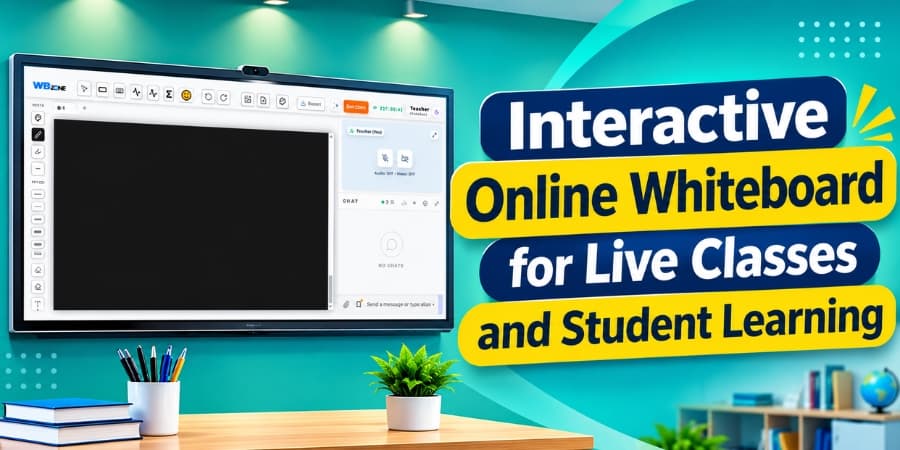
For online teachers and tutors, a digital whiteboard can help make difficult subjects easier to explain. Depending on the platform, teachers may also be able to share their screen, use digital teaching tools, and organize lesson materials in one online classroom.
Digital whiteboards are especially useful for online tutoring, live classes, exam preparation, and remote training sessions.
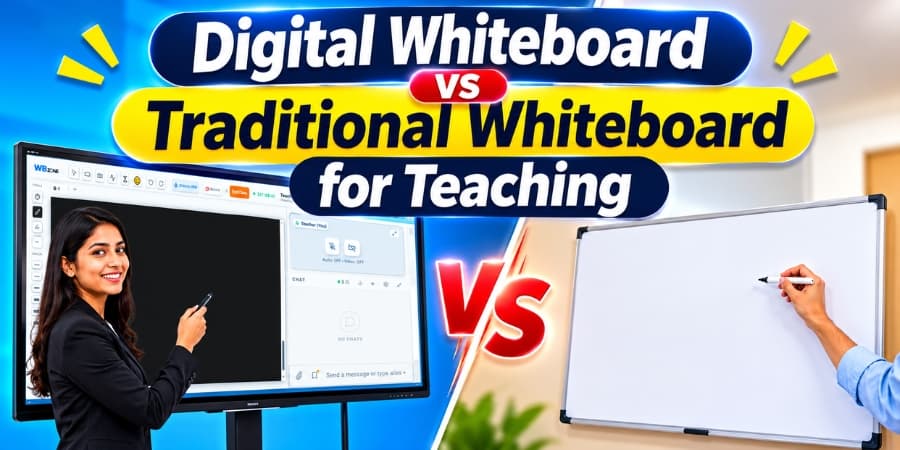
Digital Whiteboard vs Traditional Whiteboard: Key Differences
Feature | Digital Whiteboard | Traditional Whiteboard |
|---|---|---|
Teaching style | Supports visual and interactive digital explanations | Uses physical writing and drawing |
Learning environment | Suitable for online and supported in-person teaching setups | Primarily used in physical classrooms |
Visual resources | Can support digital images, diagrams, and teaching materials | Usually relies on marker drawings and printed resources |
Making changes | Digital content may be edited or moved, depending on the platform | Changes usually require erasing and rewriting |
Remote learning | Can help remote students follow explanations on their devices | Remote students may need a camera view of the physical board |
Reuse of content | Some platforms allow notes or lessons to be saved and reused | Notes usually need to be photographed or copied manually |
Setup | Requires a compatible device and suitable software | Requires a board and markers |
Benefits of Using a Digital Whiteboard for Teaching
1. Makes Lessons More Interactive
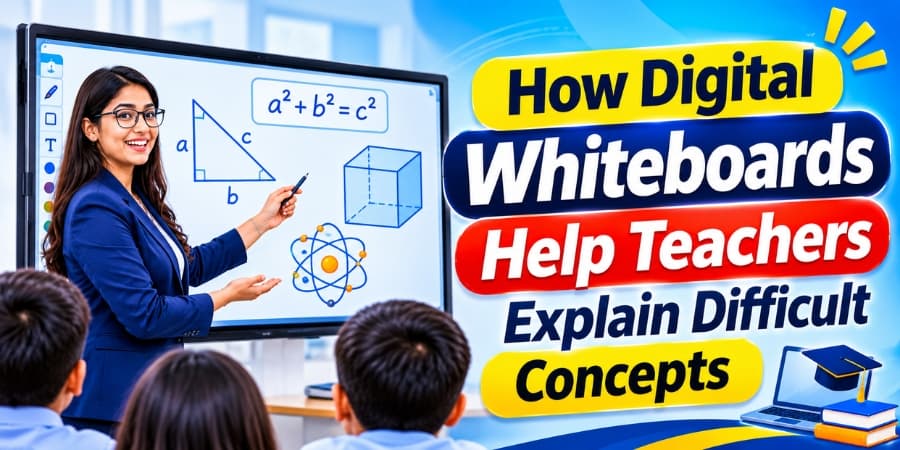
A digital whiteboard can turn a lesson into a more engaging learning experience. Teachers can highlight important points, draw diagrams, explain examples, and organize information visually instead of relying only on spoken explanations.
This approach can encourage students to follow the lesson more actively and help teachers present topics in different ways.
2. Makes Complex Concepts Easier to Understand
Some subjects are easier to learn when students can see how a concept works. Maths equations, science diagrams, grammar examples, and step-by-step problem-solving can all benefit from clear visual explanations.
A digital whiteboard gives teachers a flexible space to illustrate ideas and break complicated topics into manageable steps. This can support better understanding when combined with clear explanations and student practice.
3. Supports Flexible Online Teaching
Online tutors often need to explain concepts clearly while teaching students who may be in different locations. A digital whiteboard helps bring written explanations and visual learning materials into the online classroom.
Teachers can use it during live lessons to explain topics, work through examples, and guide students through difficult questions without relying only on slides or verbal instructions.
4. Creates a More Organized Learning Experience
Digital teaching spaces can help teachers arrange notes, diagrams, examples, and important points in a structured way. This makes it easier to present a lesson in a logical sequence.
Depending on the tools available, teachers may also be able to reuse prepared teaching materials, reducing the need to recreate the same content for every class.
5. Helps Teachers Adapt Their Teaching Methods
Every student learns differently. Some understand a topic through written explanations, while others benefit from diagrams, examples, or visual demonstrations.
A digital whiteboard gives teachers more flexibility to present the same concept in different ways. This can make lessons more accessible and help teachers respond to different learning needs.
6. Works Well for Different Subjects
A digital whiteboard can support teaching across a wide range of subjects, including mathematics, science, languages, commerce, and competitive exam preparation.
Teachers can write equations, explain grammar rules, draw diagrams, solve questions, and present key information in a clear visual format. This flexibility makes digital whiteboards useful for tutors, schools, coaching institutes, and professional trainers.
When Is a Traditional Whiteboard a Good Choice?
A traditional whiteboard remains a practical option for many physical classrooms. It is straightforward to use, does not depend on an internet connection, and can be suitable for quick explanations, classroom discussions, and everyday teaching.
Teachers who mainly teach in person and do not need digital teaching resources may find a traditional whiteboard meets their requirements.
However, when teaching involves remote students, digital learning materials, or a more flexible online classroom, a digital whiteboard may offer additional advantages.
How to Choose the Right Whiteboard for Your Classes
Before choosing a whiteboard, consider your teaching style, student needs, and learning environment.
For online tutors: Consider a digital whiteboard that makes writing and explaining concepts easy for remote students.
For coaching institutes: Look for teaching tools that support organized lessons and a consistent student learning experience.
For physical classrooms: A traditional whiteboard may be suitable for direct, face-to-face teaching.
For hybrid teaching: Consider a digital solution that works well with your online teaching setup.
For exam preparation: Choose a tool that supports clear explanations, worked examples, and practice questions.
The best option is the one that helps you teach effectively and allows students to follow the lesson comfortably.
Improve Your Online Teaching Experience with WhiteBoardZone
WhiteboardZone helps teachers create a more visual and engaging online learning experience with a digital whiteboard designed for online teaching. It gives educators a dedicated space to explain concepts, write notes, and guide students through lessons in a more structured way.
Whether you teach independently or work with a coaching institute, choosing suitable digital teaching tools can help you deliver clearer online lessons and make learning more interactive.
Visit www.whiteboardzone.com to explore WhiteboardZone and learn more about using a digital whiteboard for your online classes.
Conclusion
Traditional and digital whiteboards both have valuable roles in education. A traditional whiteboard remains useful for face-to-face teaching, while a digital whiteboard offers greater flexibility for visual explanations and online learning.
For teachers who want to make online lessons more interactive, organized, and visually engaging, a digital whiteboard is worth considering. By selecting the right teaching tools and explaining concepts clearly, educators can create a better learning experience for their students.